

Black Nails, Dewclaws and Nervous Dogs: A Calmer Nail Routine
Prepare for nail care, avoid guessing on dark claws and build comfortable handling without insisting on all four feet at once.
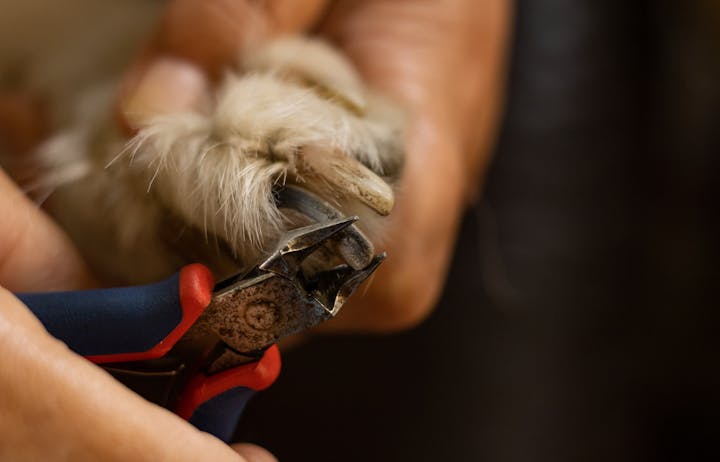
The practical answer
With black nails, the quick is harder to judge. Remove only what you can confidently assess, work in tiny stages and get a practical demonstration if you are unsure.
Set the session up for success
Choose good light, secure footing and a time when the dog is settled. Have appropriate dog nail clippers ready and agree who is handling the dog. Do not begin while rushing to leave the house or trying to restrain a dog already struggling.
Learn the technique before shortening dark nails
PDSA recommends dog-specific nail clippers, relaxed handling and help from a professional if clipping is difficult. For dark nails, ask a groomer or veterinary nurse to show the amount that can safely be removed on your dog. PDSA: clipping your dog’s nails.
There is no universal number of millimetres to remove, and a photograph or description of a dark spot is not a guarantee that the next cut is safe. If visibility, movement or uncertainty prevents a confident decision, stop. The goal is controlled maintenance, not reaching a target length in one attempt.
Break the task into smaller achievements
- Reward the dog for comfortably allowing a brief touch on the leg.
- Progress to holding a paw for a moment without squeezing or extending it awkwardly.
- Introduce the tool separately before combining it with handling.
- When the dog is ready and you know the technique, complete a small amount of nail care.
- End the session while it remains manageable—even if that means only one nail.
Remember the nails higher up the leg
Check dewclaws as well as the main toes. They are easy to miss under hair and may not wear during ordinary movement. Count each one, including any double dewclaws, and look at the surrounding skin before deciding whether routine trimming is appropriate.
| Problem | What to do |
|---|---|
| The dog repeatedly pulls away | Pause and return to easier handling practice. |
| You cannot judge the safe amount | Leave the cut and seek a demonstration. |
| A nail is embedded, torn or painful | Contact the vet rather than attempting a normal trim. |
| Bleeding occurs | Stop, apply gentle pressure with clean material and obtain veterinary advice if it does not stop promptly or the injury is significant. |
Make the next visit easier
Tell the groomer what the dog tolerated and where the session stopped. That is useful information, not a failed home task. A regular, gradual plan is preferable to leaving nails until they require a large correction, then trying to finish through distress.
For the task your groomer has demonstrated, explore VUNRO nail tools. The choice of tool does not replace learning how much can safely be removed.
Read next
- Double Dewclaws: How to Check and Care for Them
- Paw Care Between Grooms: Nails, Pad Hair and Licking
- Understanding Dog Behaviour During Grooming
Sources and further reading
Guidance checked September 2026. The practical checklists and examples are VUNRO editorial guidance; the sources below support the underlying care or equipment principles.
In practice
See the nail tools in use
Nail clippers and grinder demonstration
Watch the grip, small clipping movements and gentle smoothing with the grinder.
Keep learning
More from the Blade Blog
Paw Care Between Grooms: Nails, Pad Hair and Licking
Read the guide →


