

Use the Comb to Set a Scissor Line Without Stretching the Coat
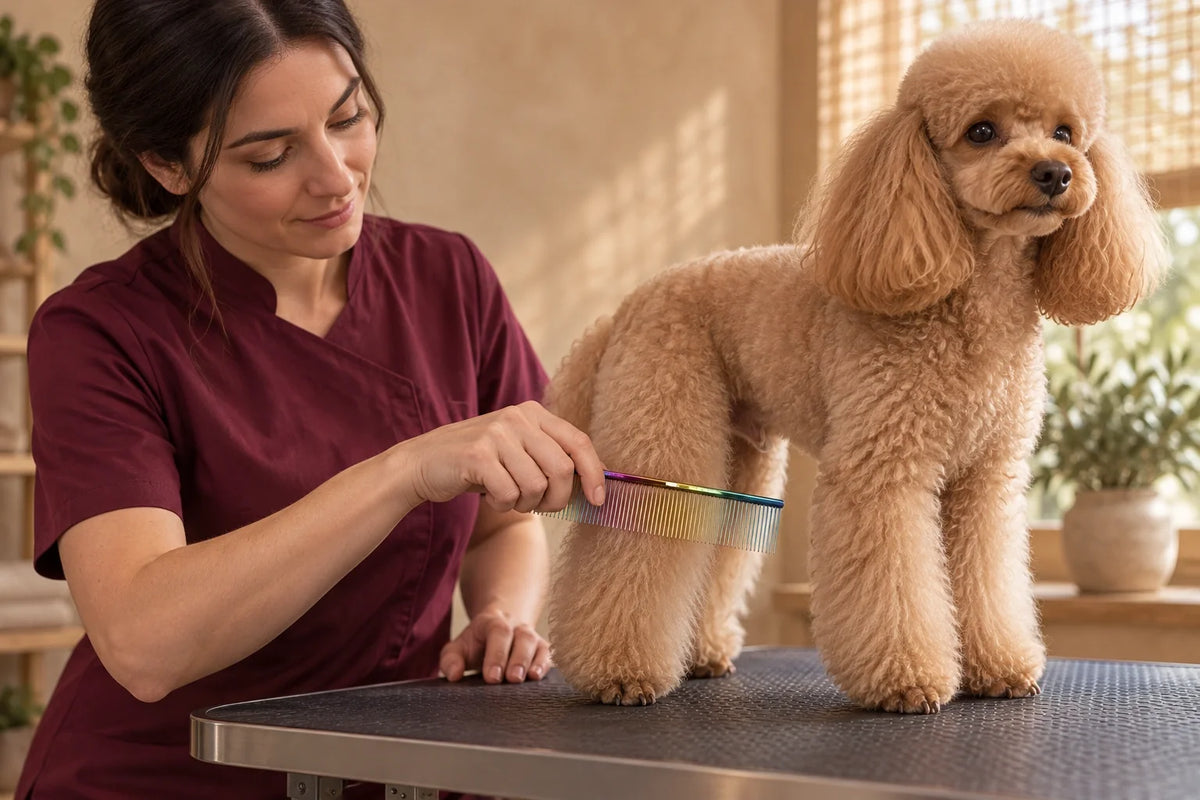
The comb can show you a tidy line that the coat will not keep. Lift a section firmly, cut to that line and release it: the finished shape may move because you cut the hair while it was held in a different arrangement.
For junior groomers, the useful distinction is between organising a section so you can see it and pulling it into a shape that exists only while you hold the comb there.
Decide what the comb is doing
Is it checking preparation, lifting a section for assessment or supporting a scissor-over-comb technique? Those jobs require different attention. A clean passage through one section does not automatically establish the cutting plane for the whole outline.
Before lifting hair, look at how it falls naturally. Notice the direction at the roots and where the coat changes density or lay. Those observations tell you what the section is likely to do when released.
Compare supported and released hair
With your tutor, practise this observation before adding scissors. Gently organise a small prepared section, hold it briefly in the intended position, then release it and watch where the outer tips settle.
If the shape changes considerably, the supported line is not a reliable picture of the finished outline. Reduce the amount you lift or change your approach. Do not compensate automatically by cutting deeper.
This is a practical comparison of coat arrangement. It does not measure individual hair-fibre elasticity, and it does not tell you how much force the dog's skin can safely tolerate.
Keep the section within your control
A wide section can hide several different directions of coat growth. Bringing all of it into one straight line may produce an attractive temporary shape while disguising what happens at either edge.
Work with enough hair to judge the correction, but little enough to see the section's boundaries and maintain control. Reposition yourself when the curve of the body changes. Avoid reaching around the dog and using the comb to drag distant hair into the same view.
If the comb meets resistance, stop and reassess preparation and section size. Extra traction is not a finishing technique.
Choose pin spacing and reach separately
The VUNRO 8-inch LUX Coarse and Fine Straight Comb has 46 coarse and 62 finer pins, with 35 mm exposed pin length. The two spacings offer different ways to organise and check suitable prepared sections. The longer pins do not mean you should press them into the skin.
For a smaller local area, compare the 5-inch Coarse and Fine Straight Comb. Choose the tool that gives you a clear view and comfortable control. Overall length alone is a poor reason to replace a comb that already suits the task.
Cut for the intended resting shape
Once the section and cutting view are appropriate, make the planned correction within your practical training. Keep the dog's movement, your supporting hand and the cutting edges under control. Stop cutting when that arrangement changes.
Clear the cut hair, release the section and reassess. Avoid repeated closures while holding the same section more firmly each time. You may be increasing the difference between the supported shape and the one the owner will see.
Lantra's finishing standard includes judging the amount to remove and where blending is needed. The observation exercise above helps make that judgement before the hair is gone. Read the finishing standard.
Keep one useful comparison from the session
Ask your tutor to identify a section where lifting improved visibility and one where it distorted the intended line. Record the difference in preparation, section size and direction. That is a more useful learning note than simply “comb up more”.
Read Map the Coat Lay Before You Set the Outline for the preparation step, then Straight or Curved Scissors: Choose the Cutting Plane First for selecting the scissor shape.
Keep learning
More from the Blade Blog

Separate a Dry Surface from a Dry Coat
Read the guide →
Check the Outline in Motion Before Making Another Cut
Read the guide →


