Grooming Salon Layout: A More Comfortable Working Space
Plan the room around dog movement, wet work, tool preparation and clear handovers before choosing decorative finishes.
The practical answer
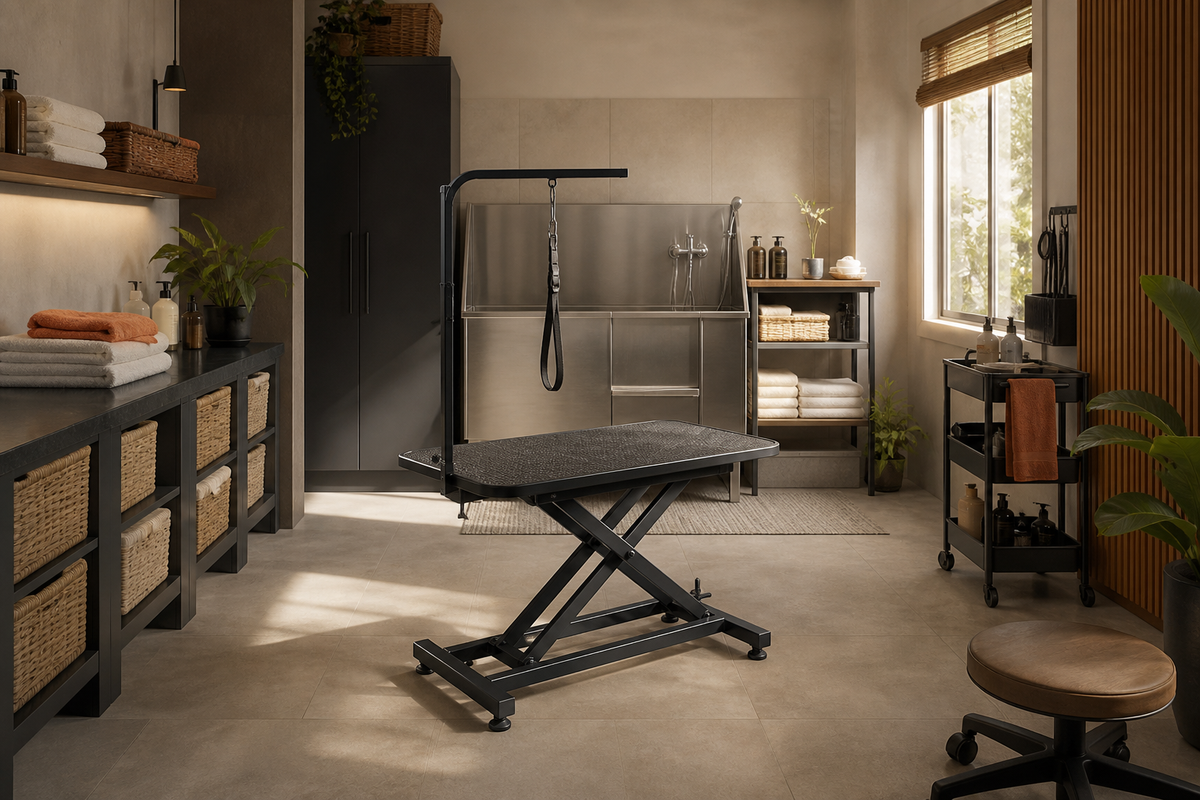
A good salon layout makes the next safe action easy: a clear route, dry footing, tools within reach and a visible separation between used and ready equipment.
Map one dog’s journey through the room
Walk the route from arrival to assessment, bathing, drying, finishing and collection. Mark every point where people, dogs, cords or wet towels cross paths. Improving those transitions can make a small room work better without adding more equipment.
Define the working zones
| Zone | Design priority |
|---|---|
| Arrival and handover | Enough space for a controlled transfer without dogs meeting unexpectedly. |
| Bathing | Water contained, products organised and towels reachable. |
| Drying and finishing | Secure footing, controllable equipment and a working height appropriate to the task. |
| Tool care | A clear process from used items to clean, ready equipment. |
| Storage | Sharp tools protected; frequently used items accessible without reaching over a dog. |
Treat wet floors as a workflow problem
HSE highlights that cleaning itself can leave floors slippery. Contain water, deal with spills promptly and manage access while a floor dries. A sign alone does not remove the hazard. HSE: preventing slips during cleaning.
During a trial groom, note where water actually travels rather than where the floor plan assumes it will stay. Move towel storage or adjust the transfer route if every bath creates the same wet crossing. Choose surfaces that can be cleaned properly and provide suitable grip.
Keep chemical and wet work organised
Store products labelled and use their directions for dilution, ventilation and protective equipment. HSE’s hairdressing guidance identifies wet work and product exposure as skin risks for workers; the relevant lesson for a grooming workspace is to assess repeated water and cleaning-product contact. HSE: wet work and product exposure.
Make the room easier for dogs to read
Reduce unnecessary movement around a dog being handled. Keep waiting areas and active work areas arranged so staff can supervise appropriately. Think about noise sources, reflections and sudden approaches as well as decoration. A visually impressive room is not automatically comfortable for the animals using it.
Test a change before investing
- Choose one recurring difficulty, such as reaching towels or moving past a dryer lead.
- Mock up the new arrangement without creating an obstruction.
- Run normal work and note whether the problem is reduced.
- Ask staff what new difficulties the change introduced.
- Keep, revise or reject the change based on the trial.
Before structural, electrical or plumbing changes, use appropriately qualified help and check local requirements. The layout checklist is for planning the workflow, not a substitute for premises design or compliance advice.
Read next
- Blade Maintenance: A Clean, Dry, Ready-to-Use Routine
- Mobile Dog Grooming: Is It the Right Service Model?
- Grooming Appointments: Build a Diary That Actually Works
Sources and further reading
Guidance checked September 2026. The practical checklists and examples are VUNRO editorial guidance; the sources below support the underlying care or equipment principles.
Keep learning
More from the Blade Blog
A Faster Clipping Pass Is Not Always a Faster Groom
Read the guide →
From Used Tool to Ready Tool: Close the Gaps in the Care Process
Read the guide →