Miniature Schnauzer Grooming: Beards, Clipping and Stripping
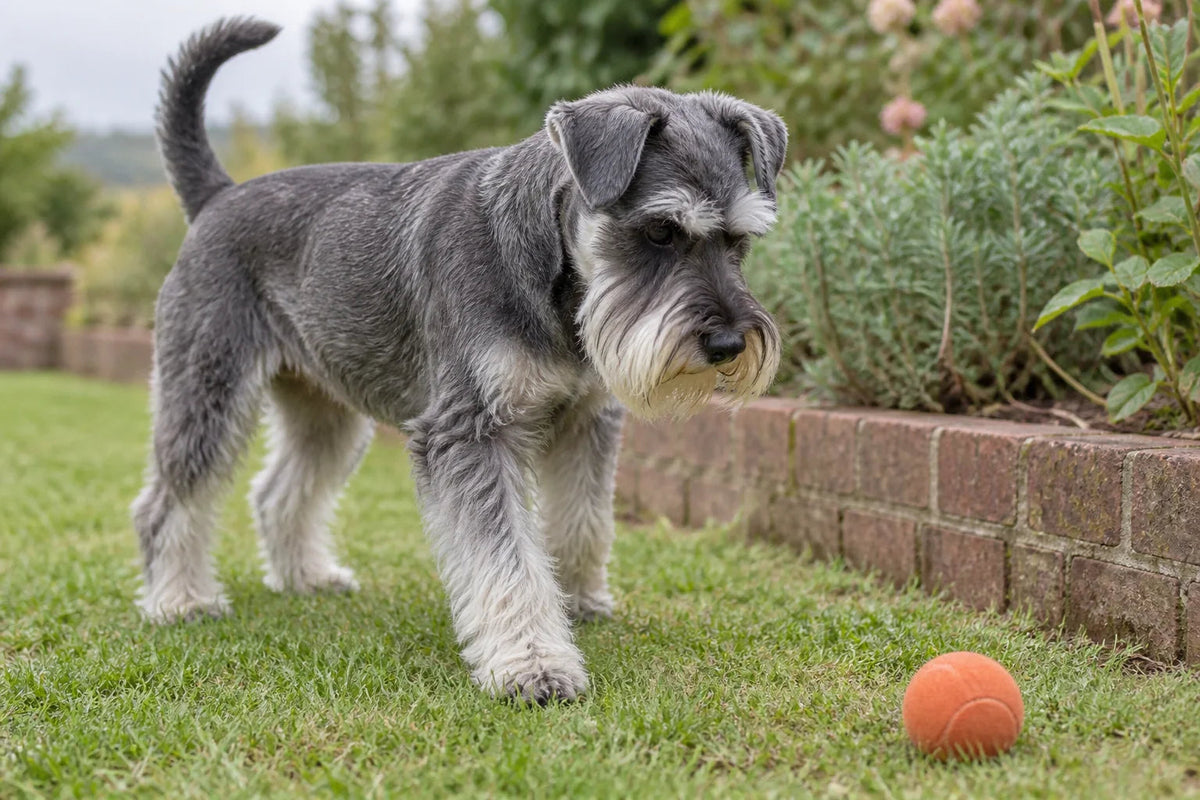
A Miniature Schnauzer’s neat outline can hide two quite different grooming jobs: maintaining the body coat and keeping the softer beard and leg hair comfortable. A freshly clipped back does not tell you whether the furnishings are free of tangles.
There is also an important decision to make before the first body haircut. Clipping and hand-stripping are different techniques, and they do not preserve the same coat texture.
Decide on the coat finish before choosing the tool. A clipped pet trim can be practical. If preserving a harsh wire jacket matters to you, speak to a groomer experienced in hand-stripping before the first clip.
Understand the clipping-versus-stripping choice
The AKC’s Miniature Schnauzer profile describes a wiry topcoat over soft undercoat. It distinguishes show-coat stripping from the clipped trims chosen for many pets.
Clippers shorten hair. Hand-stripping removes appropriate mature outer hairs using specialist technique. The AKC’s hand-stripping explainer notes that clipping a wire coat can affect its texture and colour, and that stripping requires knowledge and training.
Neither a style photograph nor the phrase “Schnauzer cut” tells the groomer which maintenance method you want. Ask what they recommend for your dog’s current coat, previous grooming, comfort and the finish you hope to retain. Do not attempt to strip an unsuitable coat or copy a plucking technique without hands-on guidance.
The beard and legs need their own care
Furnishings are the longer hair around the beard, legs and underside. These areas can collect food, water and outdoor debris even when the short body coat is easy to brush.
- After meals: gently wipe ordinary residue from the beard before it hardens into the hair.
- After drinks: dry wet ends rather than leaving the beard continually damp.
- After walks: check leg hair and feet for loose grit, twigs and plant material.
- During grooming: inspect armpits and the inside of the legs as well as the visible outer furnishings.
Support beard hair near its base when working through a loose tangle, so the comb does not pull at the lips. If the beard is consistently difficult to keep comfortable, ask for a more practical length. Preserving every centimetre is not the purpose of pet grooming.
Brush gently, then test the section
Work on a secure non-slip surface. Part longer hair into small layers and use a suitable soft brush with light strokes. Follow with a metal comb, beginning with wider spacing and only using finer teeth where they pass freely.
The VUNRO coarse-and-fine comb can help check these small sections. A snag means there is something to investigate, not that you should pull harder. Tight or felted mats need professional assessment; do not put scissors beneath them.
Keep a separate plan for the body jacket based on the method agreed with your groomer. A finishing comb is not a substitute for hand-stripping, and a clipper should not be sold to you as if it performs the same job.
Bathe according to the coat plan
Check for tangles before an ordinary bath and have substantial matting assessed first. Use dog shampoo as directed, lukewarm water and a non-slip bath surface. Rinse the beard, legs and underside carefully as well as the back, protecting the eyes and ears.
Blot rather than scrub with a towel. Dry with comfortable moving airflow if tolerated and check the roots of longer furnishings. For a clipped trim, the coat should be clean, fully dry and combable; our coat preparation guide explains the sequence.
If the jacket is being hand-stripped, ask the groomer how they want bathing scheduled around that service. Do not assume preparation for a clipped haircut and preparation for specialist stripping are interchangeable.
Keep the pet outline practical
Talk about eyebrow length, beard shape, leg furnishings and underside hair separately. The face should remain easy to see and manage, with hair clear of the eyes. Detailed eyebrow shaping is precision work around a moving face, so leave it to experienced hands.
For a clipped body trim, owners who have learned appropriate handling can consider the VUNRO D-Series clipper, which uses D-Series blades. Choose the finished length with guidance. This is a recommendation for an agreed clipped pet trim, not a claim that clipping preserves a hand-stripped wire coat.
Small checks between appointments
Inspect nails and any dewclaws regularly, introducing paw handling and nail tools in short, calm sessions. Do not rely on long leg hair or an active walking routine to tell you whether nails need attention. Ask for a demonstration if you are unsure how much to remove.
At the next groom, report where tangles returned and whether beard care was manageable. The right routine balances the coat finish you want with what keeps your dog comfortable throughout the weeks between appointments.
Keep learning
More from the Blade Blog

Whippet Grooming: Gentle Coat Care and Comfortable Nails
Read the guide →
Chihuahua Grooming: Smooth Coats, Long Coats and Tiny Paws
Read the guide →